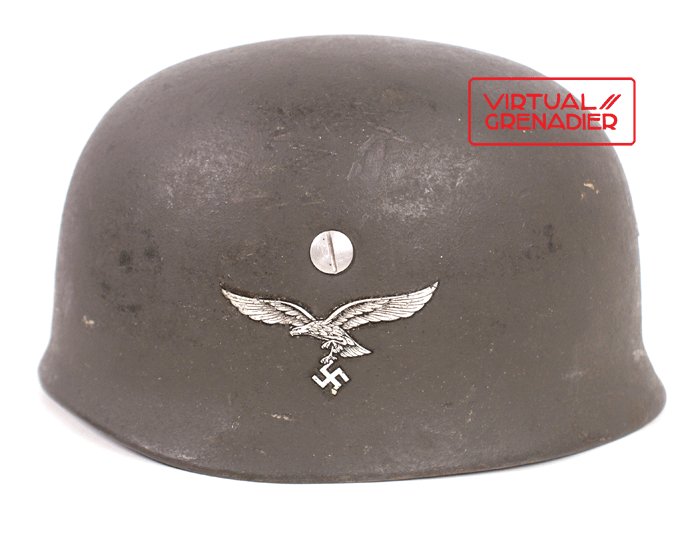
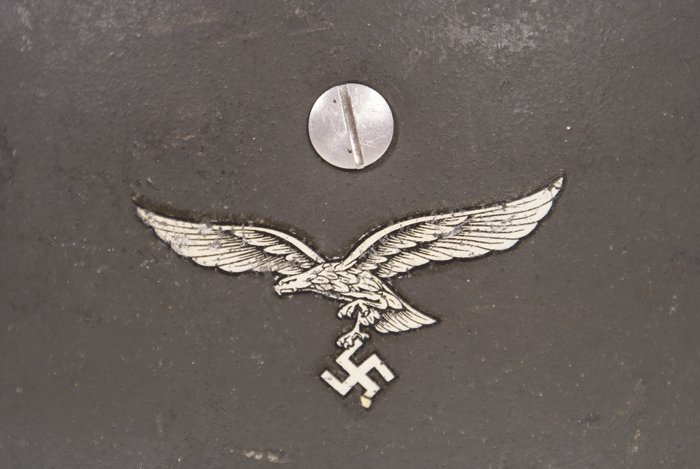
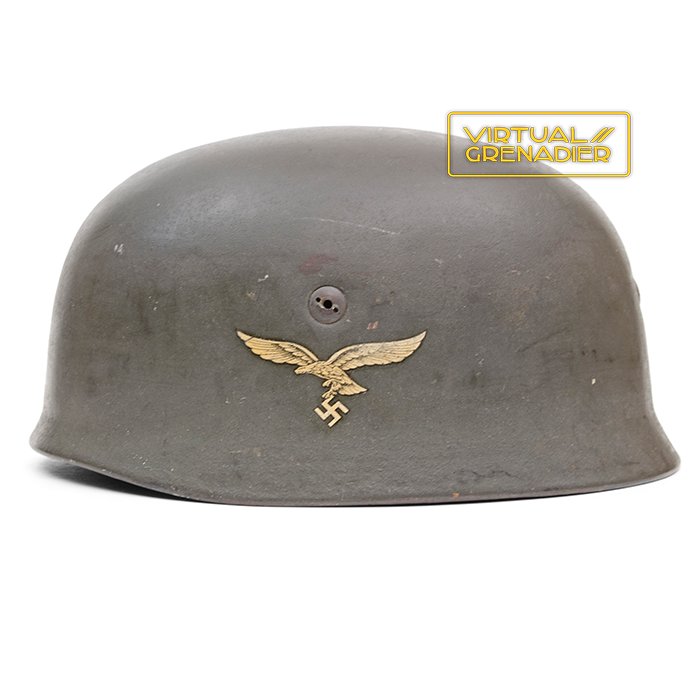
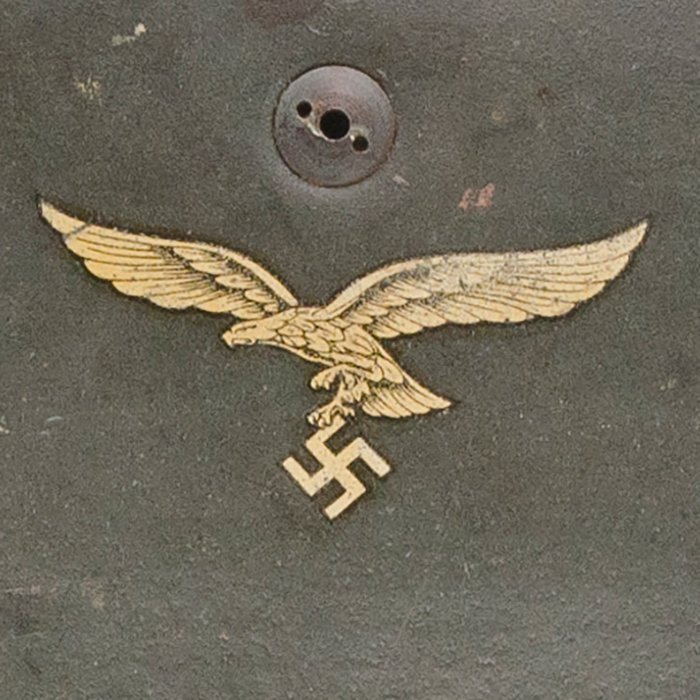
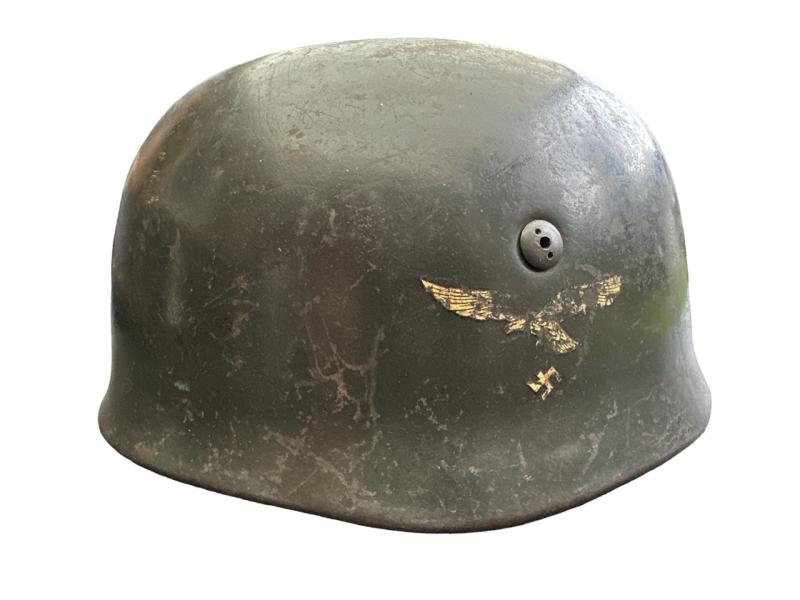
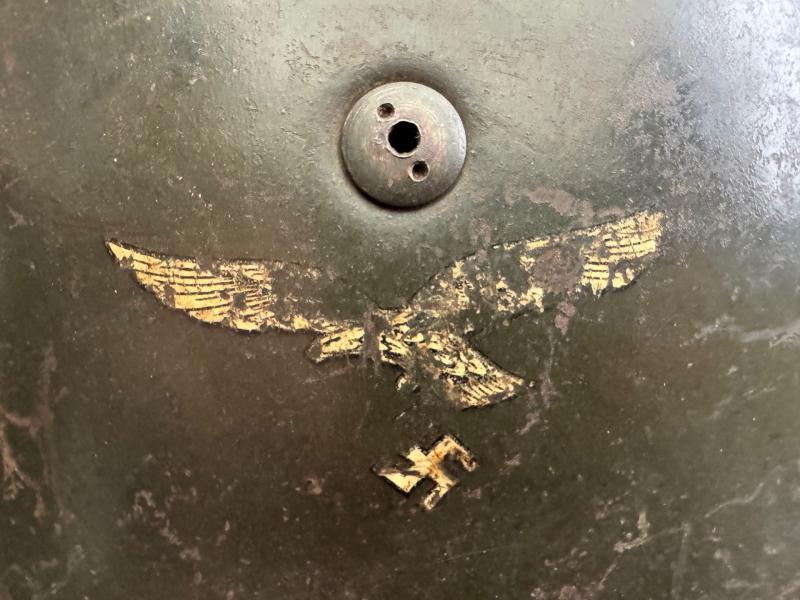
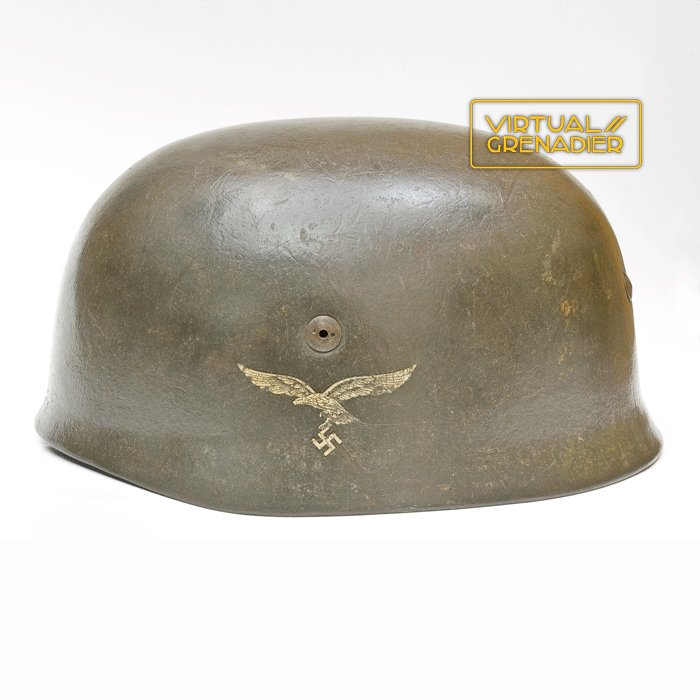
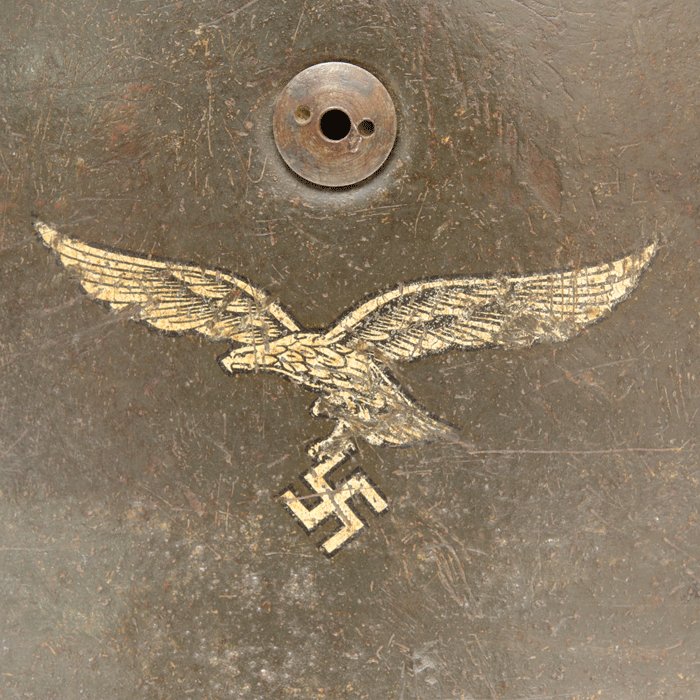
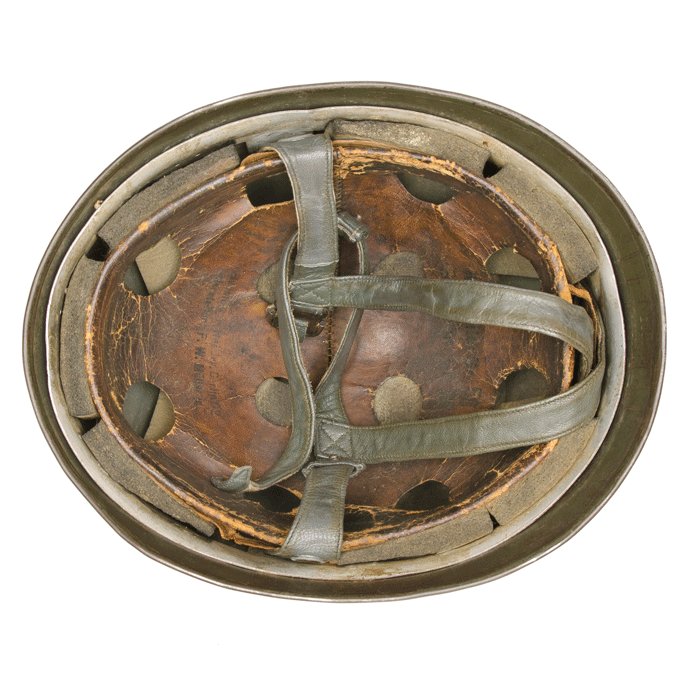
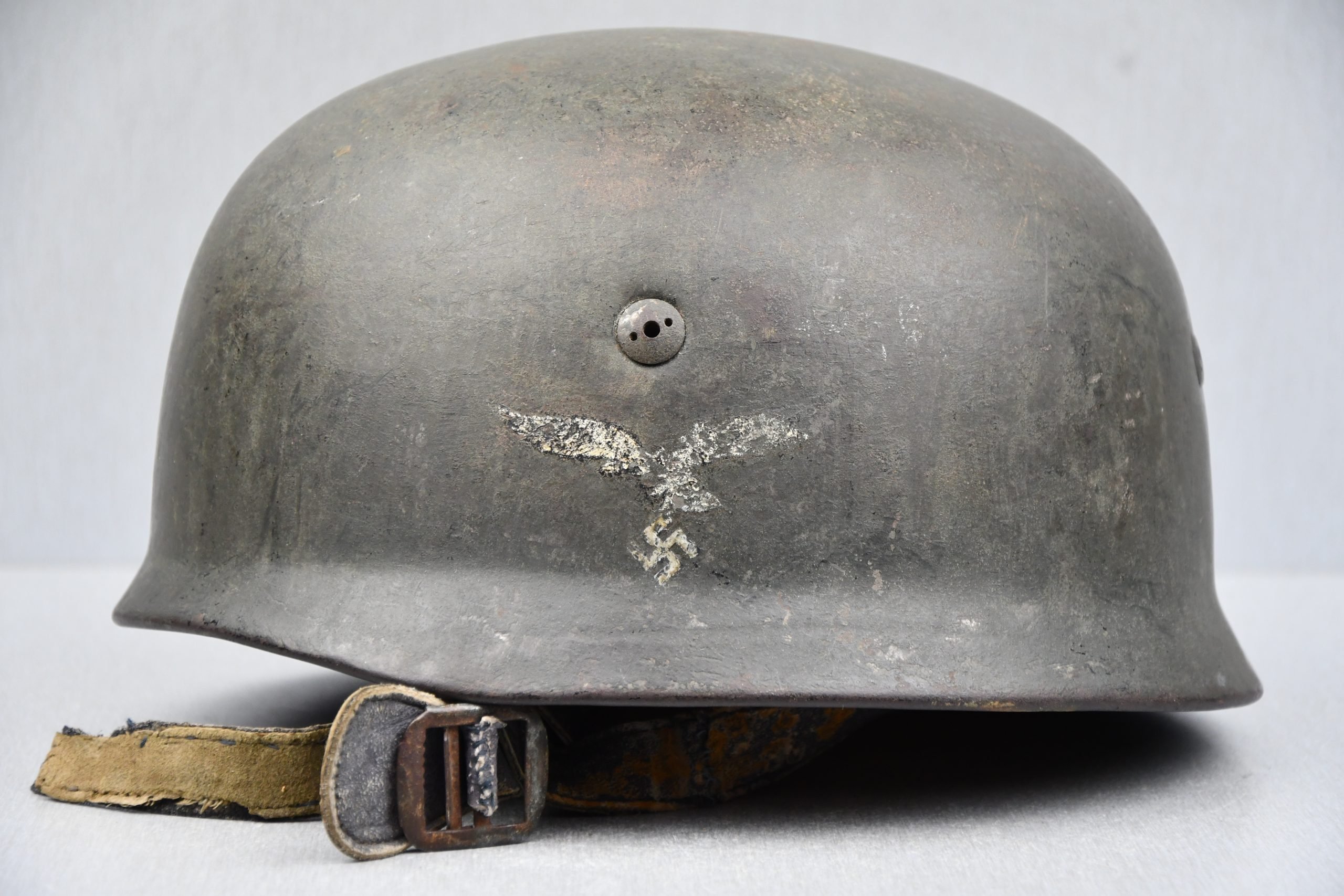
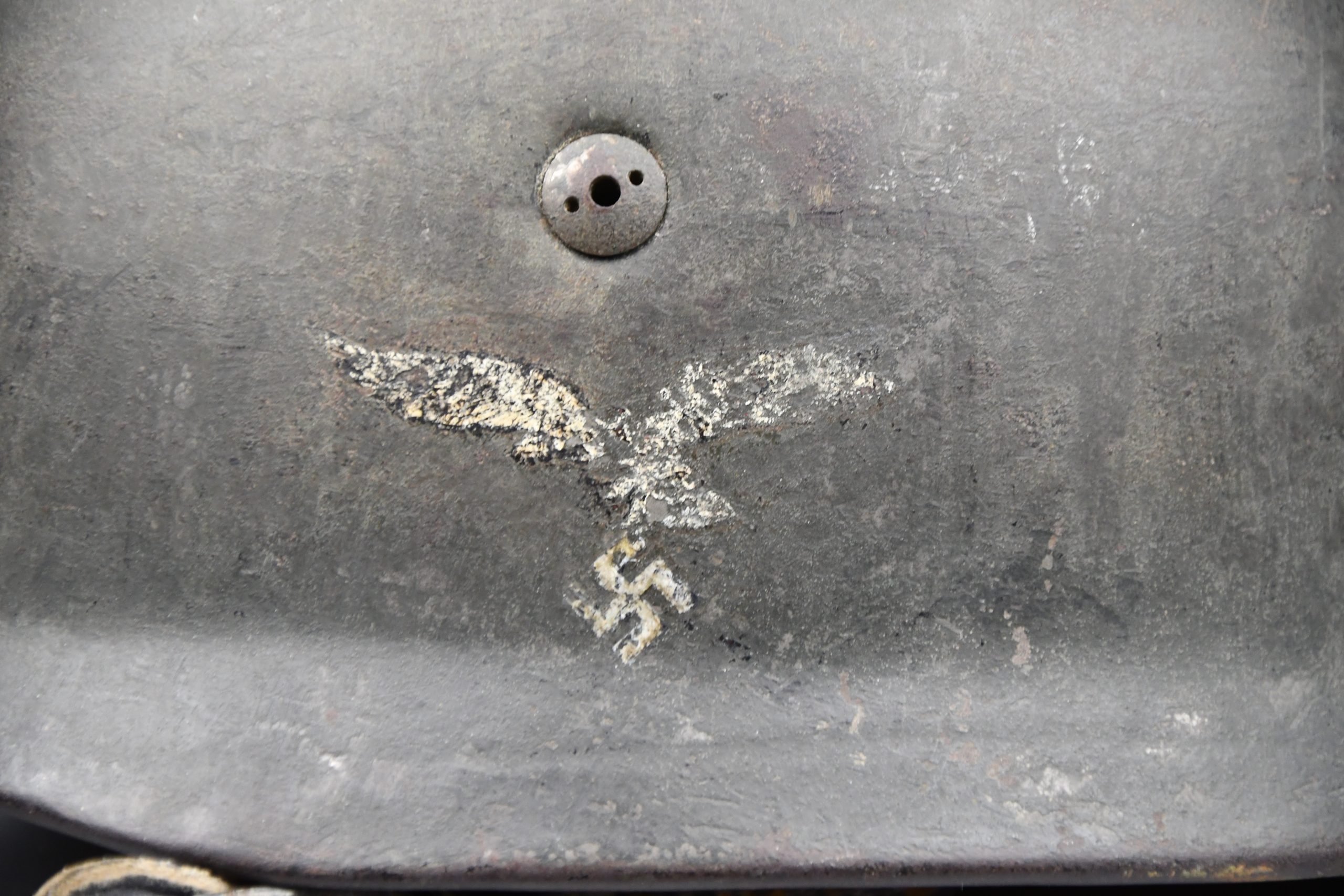
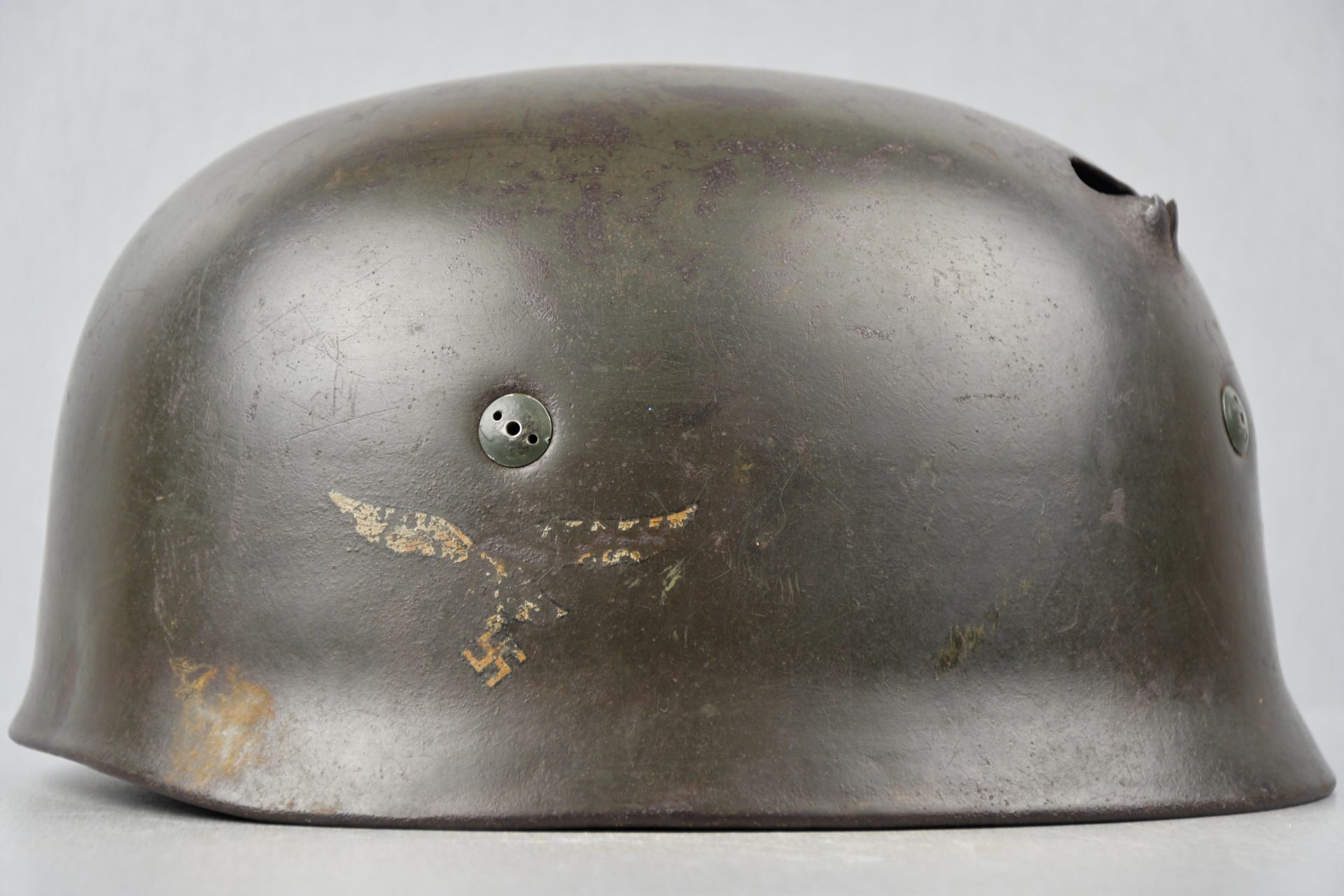
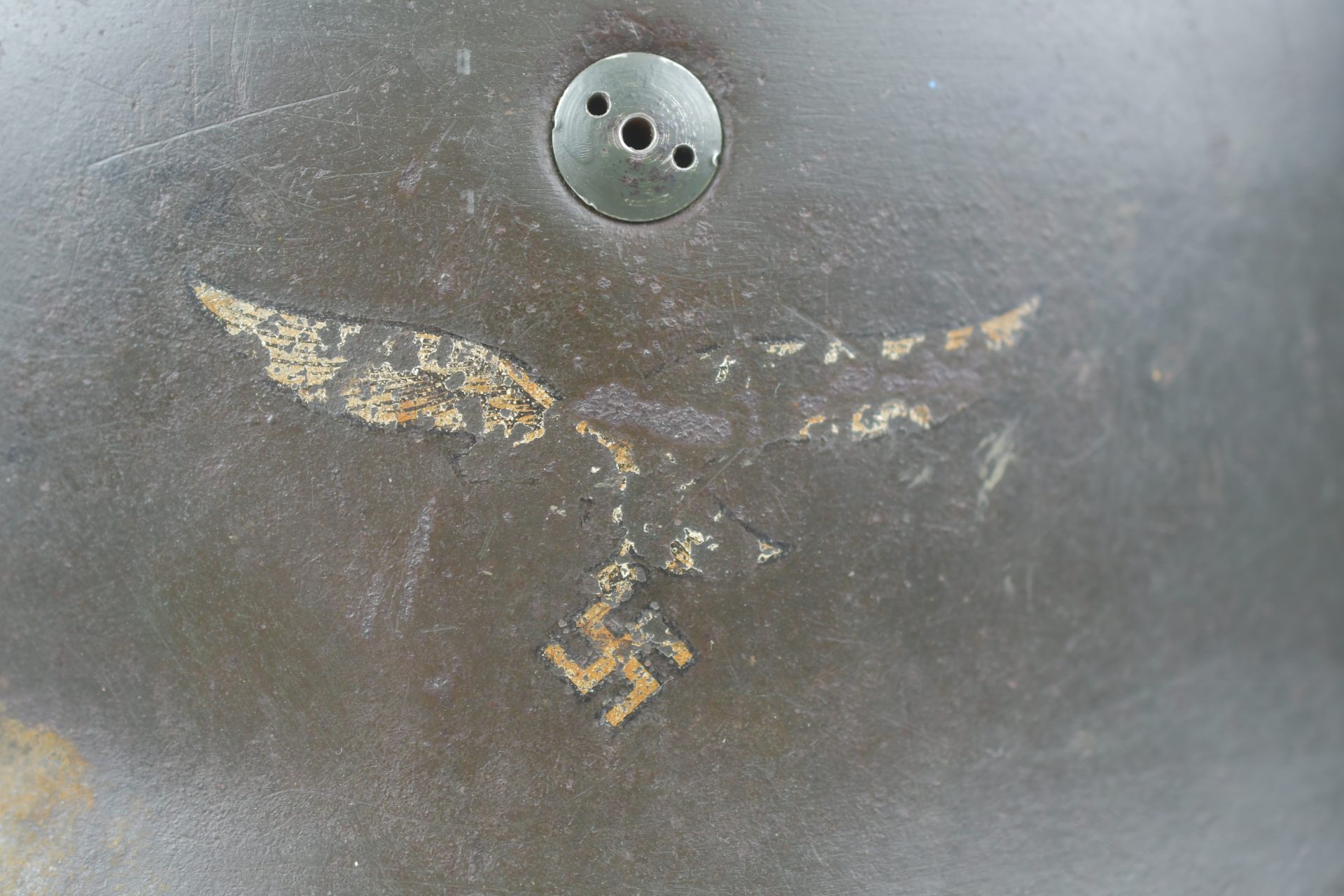
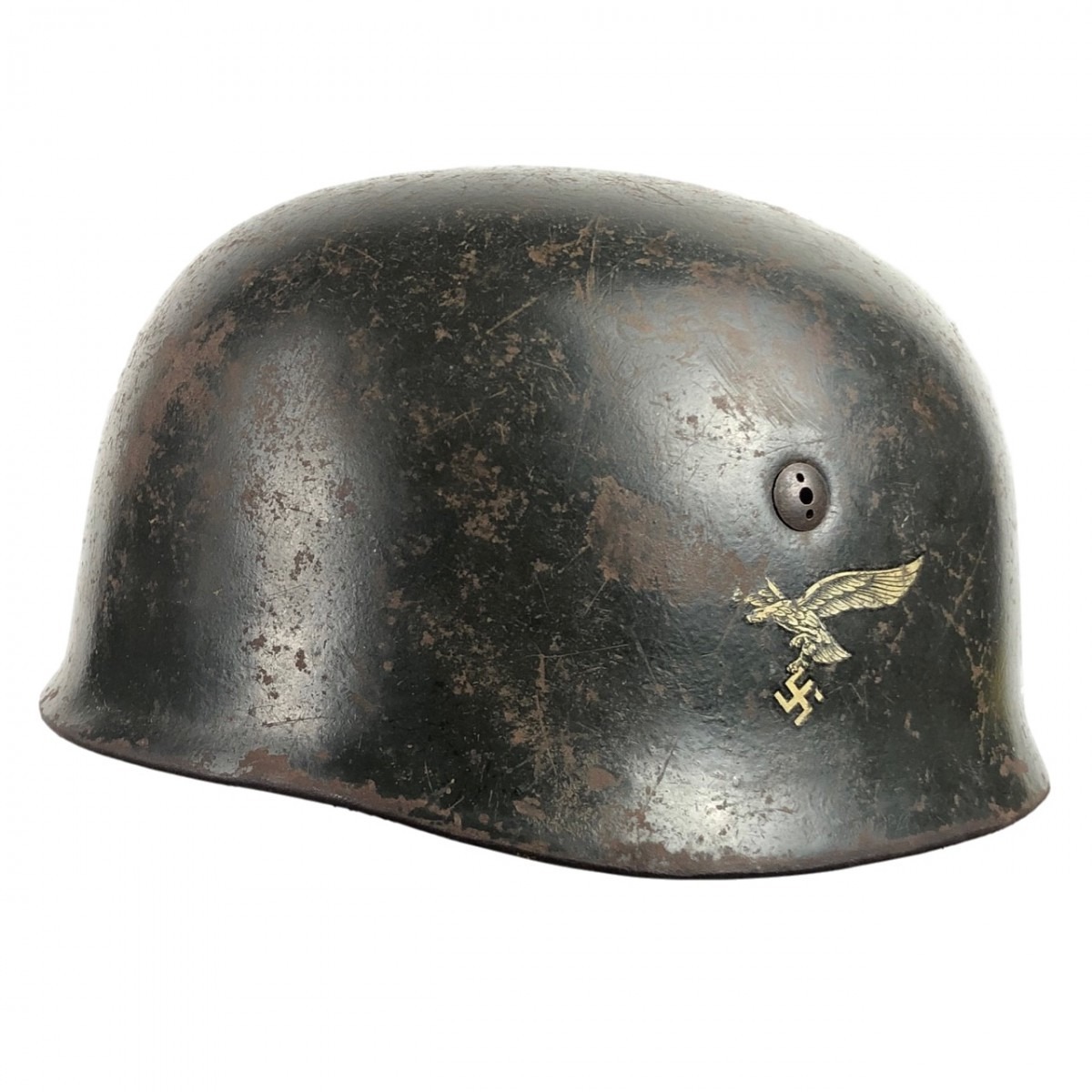
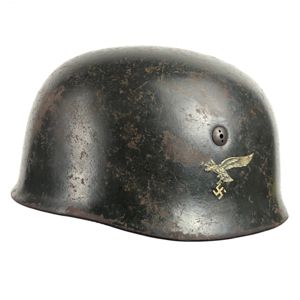
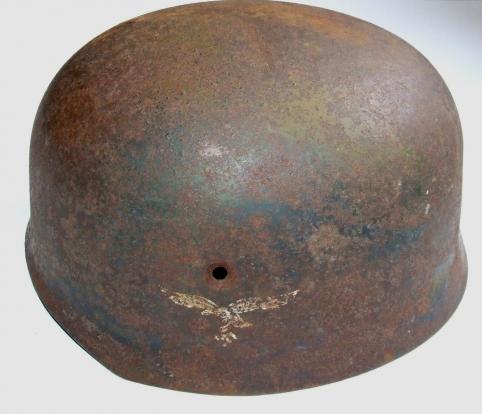
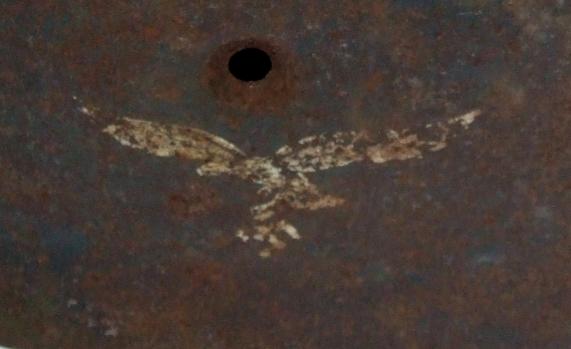
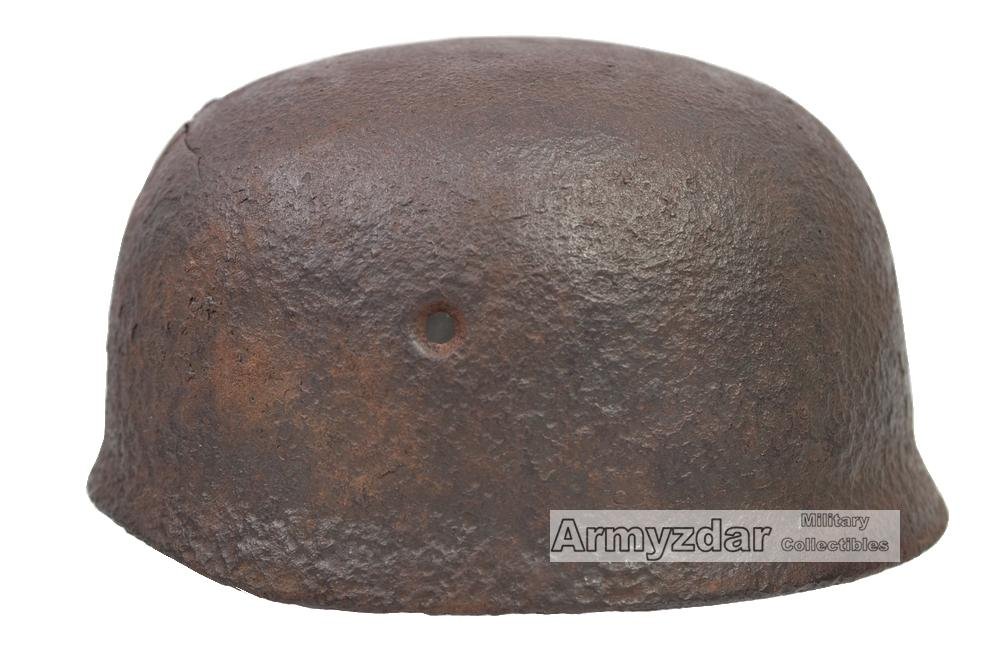
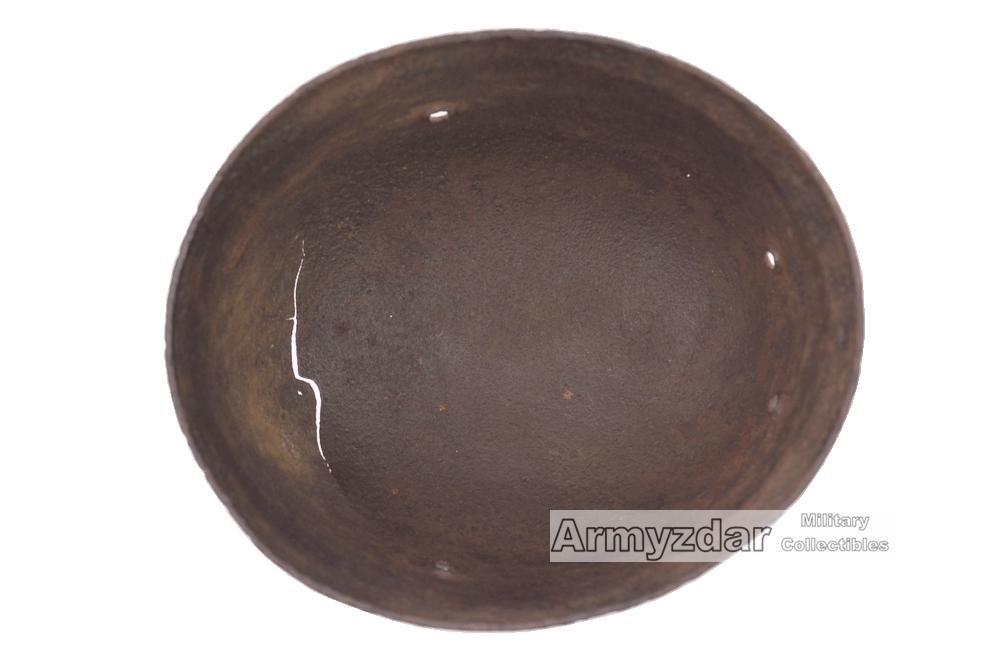
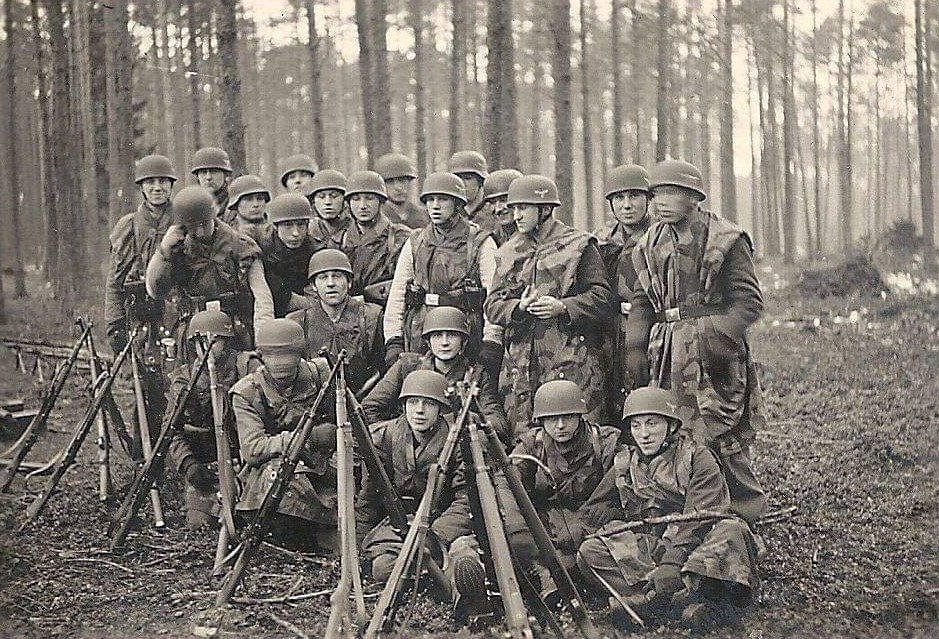
This case study looks specifically at M38 Fallschirmjäger helmets with a single Luftwaffe decal and no camouflage—standard rough-textured feldgrau combat paint, one eagle decal, and no nets, covers, whitewash, or field-applied camo. We’re deliberately excluding the ultra-rare M36/M37 predecessors, early double-decal M38s, and the more “sexy” camo or FJR 6-painted examples so that the pricing here reflects the baseline paratrooper combat helmet most collectors have in mind when they think of a “typical” German M38.
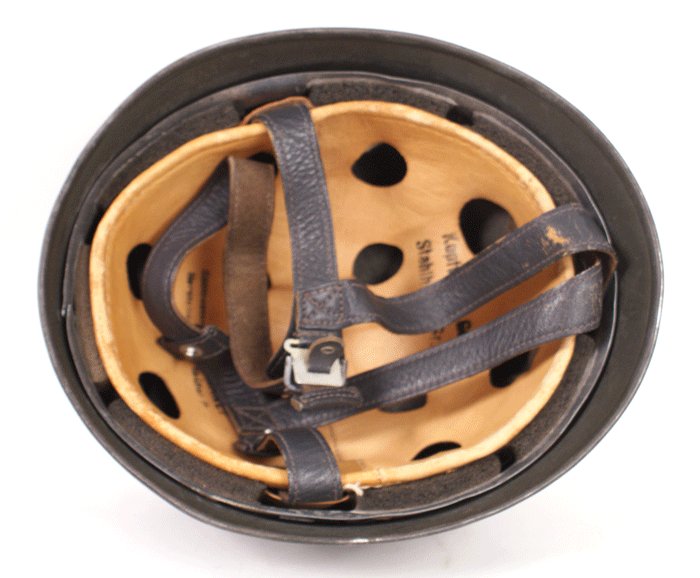
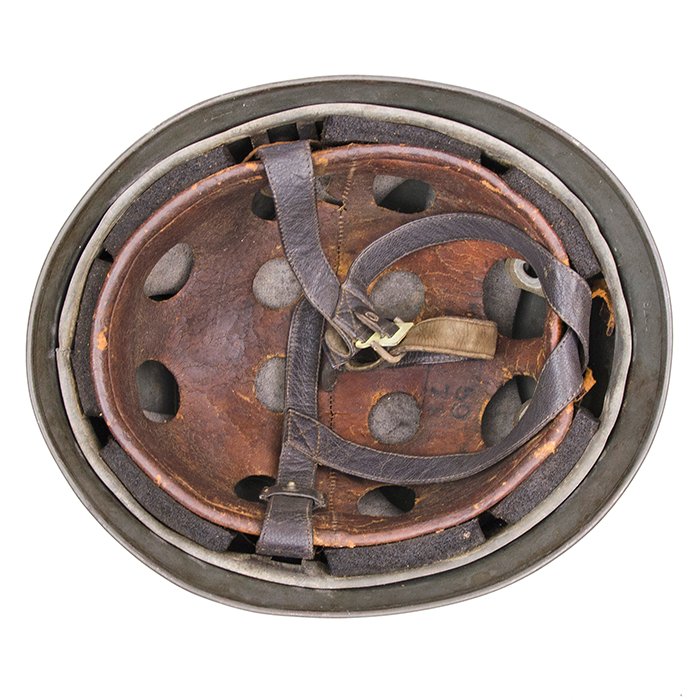
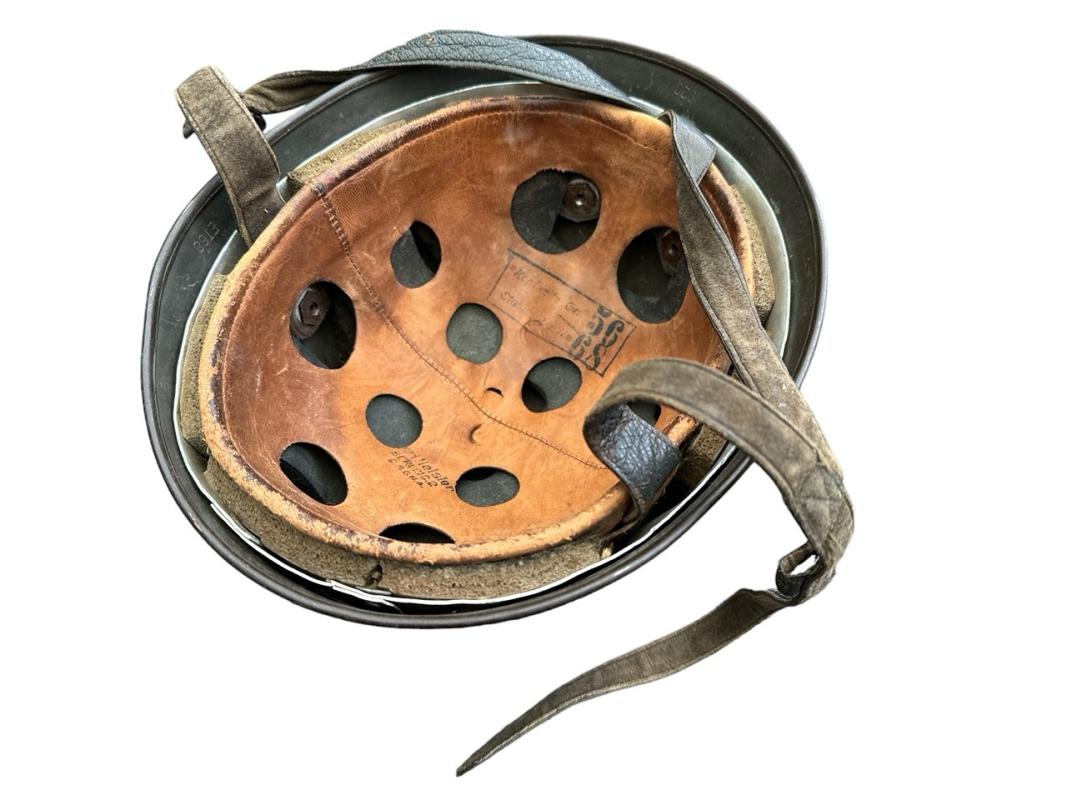
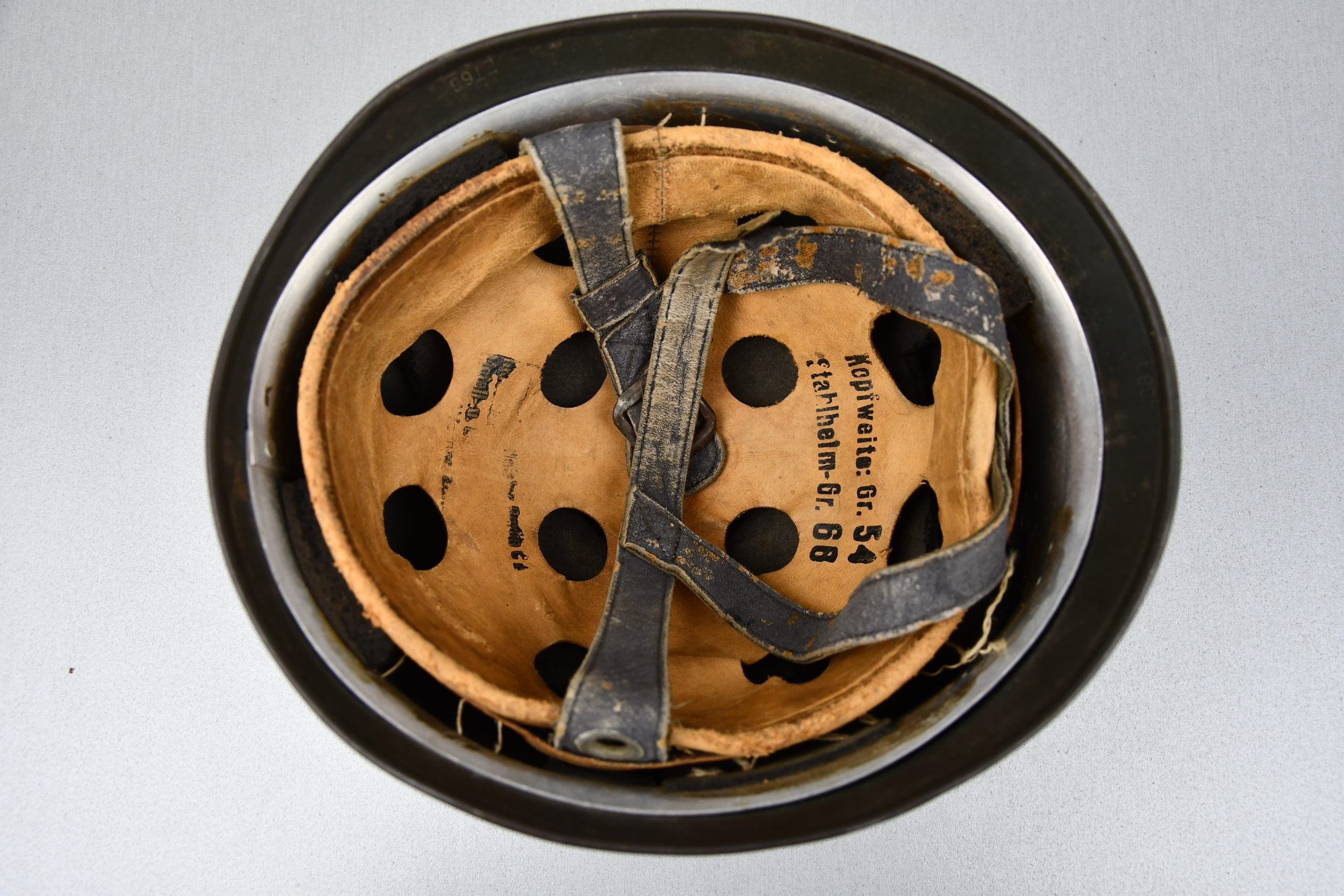
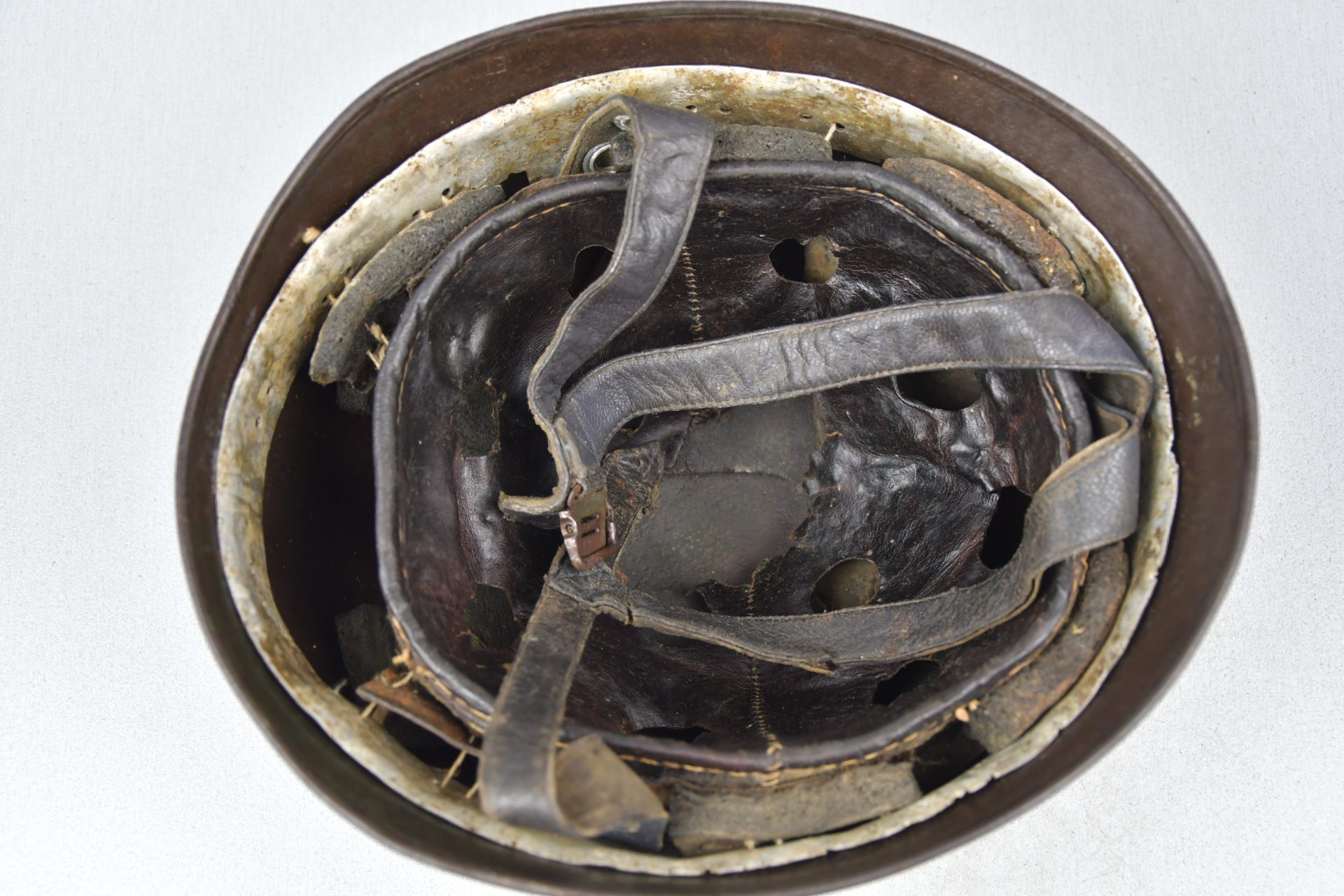
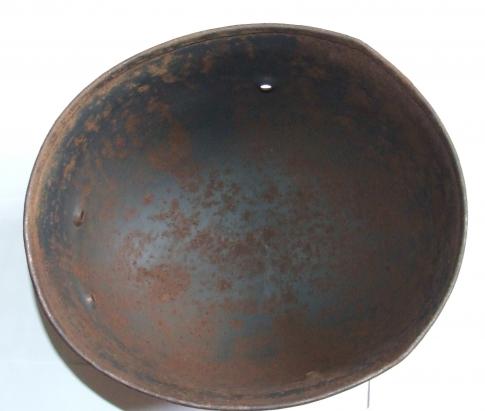
The M38 was the standard German paratrooper helmet of the war, all produced by Eisenhüttenwerke Thale (ET), with late-war shells stamped CKL instead of ET. Shells came in three sizes (66, 68, and 71) and used a distinctive paratrooper liner fixed with spanner or later slotted bolts, with early liners marked with full maker names and later ones using RB-Nr. factory codes. Within that framework there’s still a lot of nuance—early vs. mid/late-war production, hardware types, liner markings—but for this study we treat the single-decal, no-camo configuration as our reference point.
I’ve only owned and handled a handful of these beautiful helmets in my life, so it’s hard for me to instinctively know what a “good” price is—especially in a market where M38s are high demand, very expensive, and heavily faked. Even if you get comfortable with originality checks, you’re still left wondering if a given asking price is fair or just dealer optimism. For this case study, I pulled together a solid sample of single-decal, no-camo M38s from the Milivault database to see what the real market is doing across different condition levels. If you have one of these and are curious where it might land, hit the “What is mine worth?” button to see what our model estimates for your helmet within this specific category.

 Germany
 Helmets & Accessories