
1 / 7

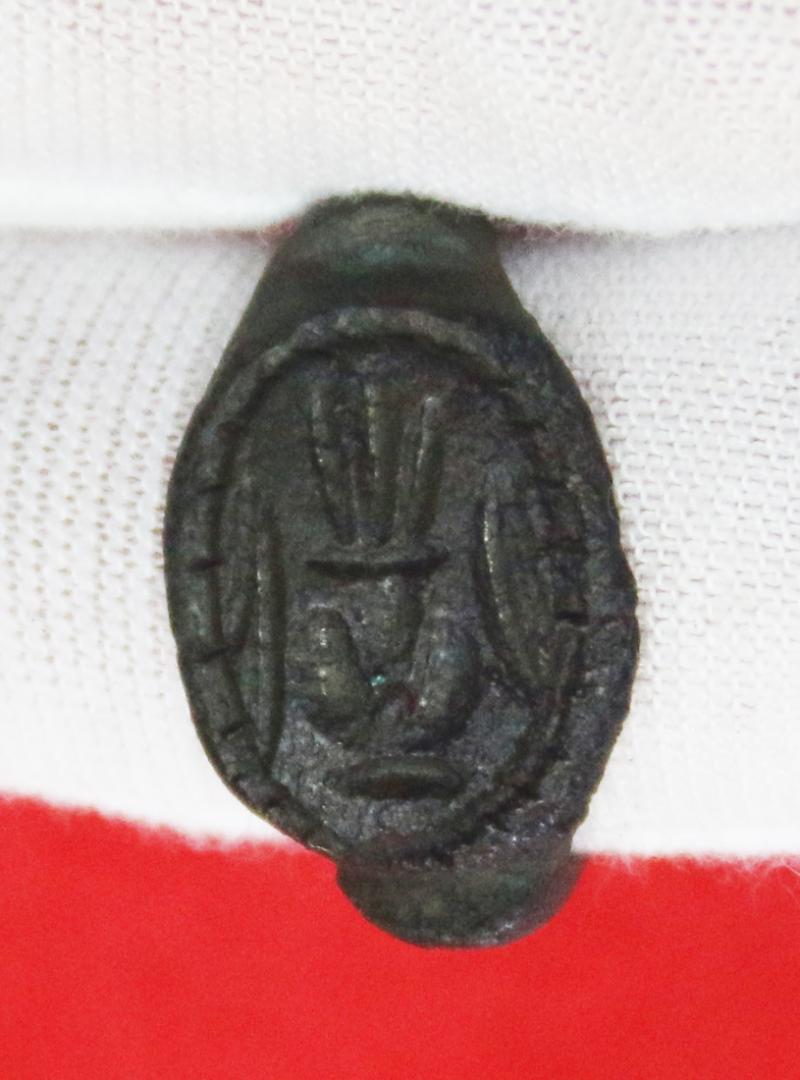
A Beautiful Original Roman 1st to 2nd Century A.D. Modius or Fire Alter Status Seal Ring. Worn From The Reigns Of Emperor Augustus Through To Emperor Flavian
Available
£345.00
—
Description
The Julian DynastyAugustus (also known as Octavian, he was the first official emperor, reigning from 27 BC to AD 14)Tiberius (reigned from AD 14 to 37)Caligula (reigned from AD 37 to 41)Claudius (reigned from AD 41 to 54)Nero (reigned from AD 54 to 68)The year of the 4 emperors, preceded by reign dates.June 68 - Jan 69: GalbaJan 69 - Apr 69: OthoApr 69 - Dec 69: VitelliusThe Flavian Dynasty69 - 79: Vespasian79 - 81: Titus81 - 96: DomitianThe Nerva-Antonine Dynasty96 - 98: Nerva98 - 117 a.d.: TrajanHenig type Xb. Wide oval bezel affixed to flattened shoulders engraved copper alloy. Almost identical to one found in the UK near Hadrian's Wall. Engraved to either to represent the Zaroastrian fire altar, or vessel of sprouting grains. The engraved intaglio seal ring was important for displaying the Roman's status. For example Tiberius, who was after all left-handed according to Suetonius, thus displays a ring in his bronze portrait as the Pontifex Maximus: The complete Roman Empire had around a 60 million population and a census more perfect than many parts of the world (to collect taxes, of course) but identification was still quite difficult and aggravated even more because there were a maximum of 17 men names and the women received the name of the family in feminine and a number (Prima for First, Secunda for Second…). A lot of people had the same exact name.So the Roman proved the citizenship by inscribing themselves (or the slaves when they freed them) in the census, usually accompanied with two witnesses. Roman inscribed in the census were citizens and used an iron or bronze ring to prove it. With Augustus, those that could prove a wealth of more than 400,000 sesterces were part of a privileged class called Equites (knights) that came from the original nobles that could afford a horse. The Equites were middle-high class and wore a bronze or gold ring to prove it, with the famous Angusticlavia (a tunic with an expensive red-purple twin line). Senators (those with a wealth of more than 1,000,000 sesterces) also used the gold ring and the Laticlave, a broad band of purple in the tunic.So the rings were very important to tell from a glimpse of eye if a traveller was a citizen, an equites or a senator, or legionary. People sealed and signed letters with the rings and its falsification could bring death.The fugitive slaves didn't have rings but iron collars with texts like 'If found, return me to X' which also helped to recognise them. The domesticus slaves (the ones that lived in houses) didn't wore the collar but sometimes were marked. A ring discovered 50 years ago is now believed to possibly be the ring of Pontius Pilate himself, and it was the same copper-bronze form ring as is this one. Comes in a complimentary box
Dealer Info
Dealer Info
-
 Brighton, East Sussex · United Kingdom