
1 / 1

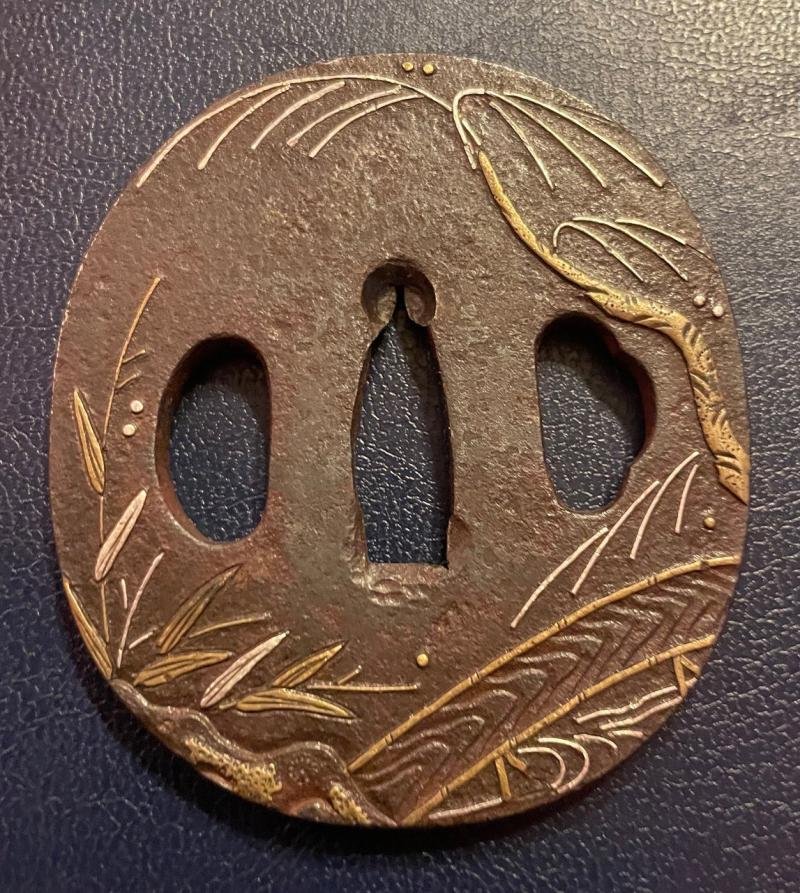
Beautiful Koto Wakazashi, 16th Century, Soten School Fuchgashira, Goto Shishi Lion Dog Kozuka, Silver Urushi Aoi Leaf Lacquer Decor Saya, Hira-zogan Tetsu Shinto Tsuba Inlaid With Kinko Weeping Willow
Available
£5450.00
—
Description
Blade just returned from a no expense spared fabulous & traditional, fine, hand polish, showing an excellent gunome hamon. All original Edo period finest koshirae, with Edo saya and urushi lacquer.The round tsuba is hira-zogan iron tetsu inlaid with flat kinko, and a pair of menuki of Okinawa Goldlined Spinefoot fish over traditional samegawa, and under the traditional blue silk tsuka-ito hilt binding. Soten fushigashira in takebori shakudo, pure gold and silver overlay, of a sage in a gold robe and matching cap, holding a gold fan. Beneath him is a swirling sky dragon and turbulent sky, and the fuchi of takebori gold flower heads, in crashing waves.Wakizashi have been in use as far back as the 15th or 16th century. The wakizashi was used as a backup or auxiliary sword; it was also used for close quarters fighting, and also to behead a defeated opponent and sometimes to commit ritual suicide. The wakizashi was one of several short swords available for use by samurai including the yoroi toshi, the chisa-katana and the tanto. The term wakizashi did not originally specify swords of any official blade length and was an abbreviation of 'wakizashi no katana' ('sword thrust at one's side'); the term was applied to companion swords of all sizes. It was not until the Edo period in 1638 when the rulers of Japan tried to regulate the types of swords and the social groups which were allowed to wear them that the lengths of katana and wakizashi were officially set.Kanzan Sato, in his book titled 'The Japanese Sword', notes that the wakizashi may have become more popular than the tanto due to the wakizashi being more suited for indoor fighting. He mentions the custom of leaving the katana at the door of a castle or palace when entering while continuing to wear the wakizashi inside. Wakizashi were worn on the left side, secured to the obi waist sash. The Sengoku period Sengoku Jidai, 'Warring States period') is a period in Japanese history of near-constant civil war, social upheaval, and intrigue from 1467 to 1615, straddling the end of the Koto era and into the early Shinto.20.3 inches overall in saya, 13.5 inch blade tsuba to tip blade Overall in very nice condition, natural aging wear to the tsukaito, usual age wear to fuchigashira. Saya and blade excellent.Every single item from The Lanes Armoury is accompanied by our unique Certificate of Authenticity. Part of our continued dedication to maintain the standards forged by us over the past 100 years of our family's trading, as Britain's oldest established, and favourite, armoury and gallery
Dealer Info
Dealer Info
-
 Brighton, East Sussex · United Kingdom