1 / 3
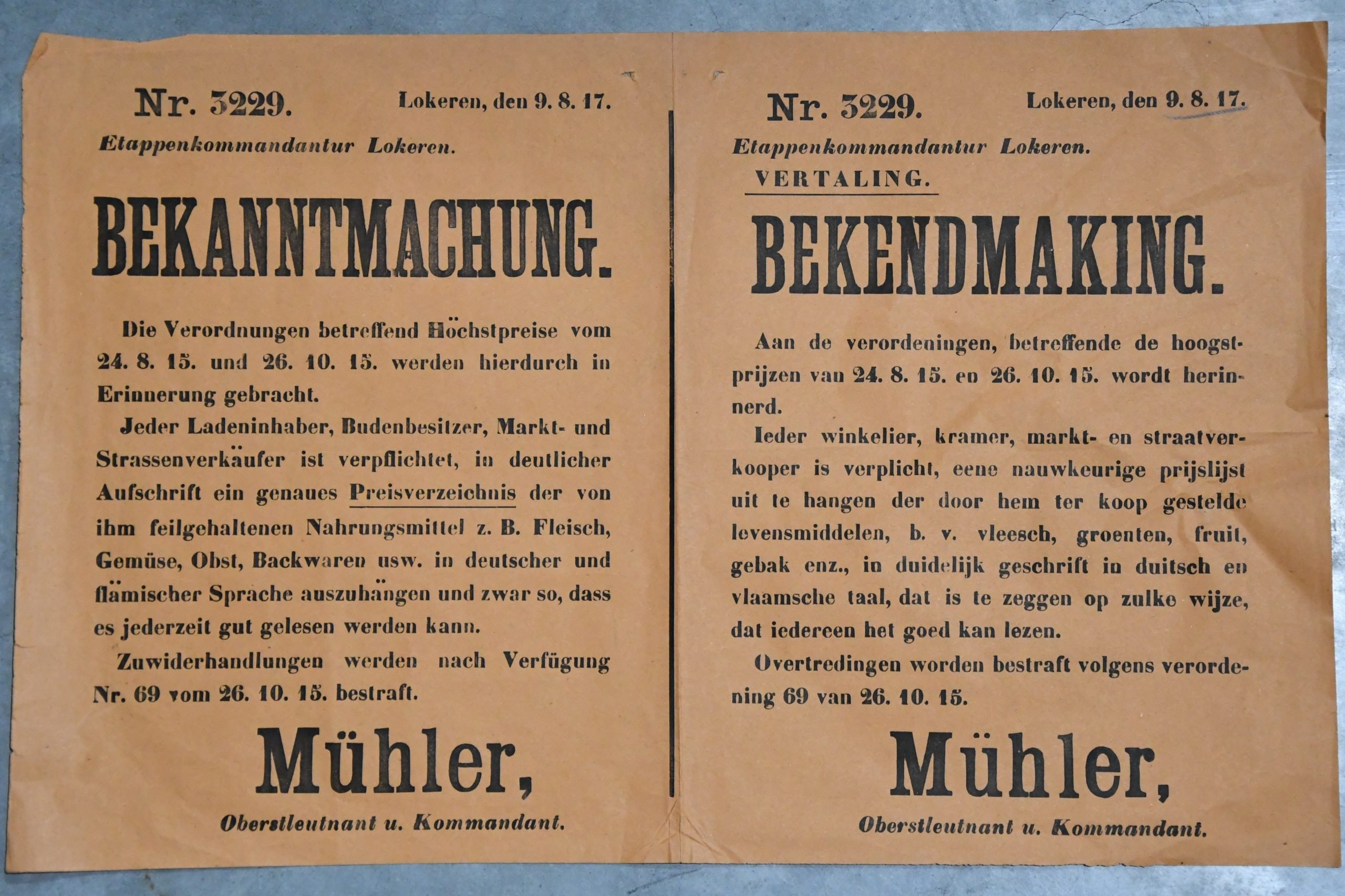
Original WWI German Occupation Poster 'Bekanntmachung / Bekendmaking – Maximum Prices Regulation' – Etappenkommandantur Lokeren – 1917 – approx. 36 × 55 cm
Sold
€50.00
—
Description
An original First World War German occupation poster issued by the Etappenkommandantur in Lokeren on 9 August 1917. The proclamation appears in both German and Dutch, reflecting the administrative practice of the German military authorities in occupied Belgium to publish official regulations in both languages for the local population.The notice concerns the regulations regarding maximum prices for foodstuffs, originally established by decrees dated 24 August 1915 and 26 October 1915. These regulations are here formally reiterated and brought again to the attention of the public. During the war years, strict price controls were imposed to prevent speculation, profiteering, and uncontrolled price increases in essential goods.According to the order, all shopkeepers, stall holders, market traders and street vendors were required to clearly display a detailed price list for the food products they offered for sale. Examples listed include meat, vegetables, fruit, baked goods and similar food items. The price list had to be written in both German and Flemish and displayed in such a way that it could easily be read by customers at all times.The proclamation further warns that violations of these regulations would be punished in accordance with Decree No. 69 of 26 October 1915, highlighting the strict enforcement of economic controls during the occupation.The notice was issued under the authority of Oberstleutnant Mühler, acting as Etappenkommandant of Lokeren. Such posters were publicly displayed throughout towns and villages to ensure compliance with German administrative regulations.Measuring approximately 36 × 55 cm, the poster shows typical signs of age including fold lines, light staining and minor wear consistent with original wartime paper notices.A historically interesting example of economic regulation and civilian administration under the German occupation of Belgium during World War I, making it an appealing item for collectors of WWI occupation material, German military administration documents, and early historical posters.
Dealer Info
Dealer Info
-
 Zulte, Oost-Vlaanderen · Belgium